Why Some People React to Everything
'Sensitive skin' isn't one condition — it can be irritant reaction, allergy, nerve sensitivity or a damaged barrier amplifying everything at once. Working out which is the first step to finding what you can actually tolerate.
If your skin seems to object to almost everything you put on it — stinging, flushing, breaking out, regardless of what the product claims to be — you’re not imagining it, and you’re not alone. Sensitive skin affects roughly half the population to some degree. But “sensitive skin” isn’t a diagnosis so much as a symptom, and it can have several quite different causes hiding underneath the same complaint. Working out which one applies to you is the actual first step, not another cleanser.
What it actually is
There isn’t one mechanism behind “I react to everything.” At least four distinct things tend to get lumped under that label, and they don’t respond to the same fixes.
Irritant contact dermatitis is a direct, dose-dependent reaction — enough of almost any substance will irritate almost anyone, and sensitive skin simply reacts at lower concentrations than others do. It shows up as burning or stinging during or shortly after application, redness that develops quickly, and sometimes dryness or peeling. No prior exposure is needed; it can happen on first use.
Allergic contact dermatitis is different — an immune response to a specific allergen, requiring prior sensitisation. It tends to appear 24–72 hours after exposure, present as itchy, raised patches that may blister, and worsen with repeated exposure to the same allergen regardless of which product it’s in or at what concentration. Fragrance (natural and synthetic), certain preservatives (methylisothiazolinone and MCI among the more notorious), some plant extracts, and occasionally active ingredients are common culprits.
Neurogenic sensitivity is a heightened sensory response with no inflammation or immune activation behind it — nerves that are simply more reactive, producing stinging or tingling with little or no visible reaction. It’s often triggered by specific ingredients, niacinamide and ascorbic acid being frequent offenders, and by heat, cold or touch generally.
An underlying condition — rosacea, eczema, psoriasis — can make sensitivity a core feature rather than an occasional side effect. If you have persistent redness, visible blood vessels or chronic patches alongside the reactivity, that’s worth investigating as its own issue rather than treating as generic sensitivity.
The barrier connection
In a lot of “reacts to everything” cases, the root cause traces back to the barrier rather than any one ingredient. A healthy stratum corneum keeps irritants out and water in through tightly organised lipids and properly functioning corneocytes; when that structure is compromised — from genetics, from damage, often both — the consequences cascade. More irritants and allergens penetrate to living tissue that a healthy barrier would have blocked. Whatever does get through effectively arrives at a higher dose than it would on intact skin, so mild products behave like aggressive ones. Barrier damage itself triggers inflammatory signalling, leaving the immune system primed to overreact to minor provocations. And with barrier function down, sensory nerves become more exposed, producing stinging or burning even from ingredients that aren’t genuinely irritating anyone else. For a lot of people, this is the real explanation: not that every product is a problem, but that a damaged barrier is amplifying all of them at once. If you’re not sure whether your barrier is the issue, this piece on the signs of barrier damage is a useful next step.
The skin microbiome plays a supporting role here too. A healthy microbial community helps maintain the barrier, modulates immune response, protects against pathogens and supports pH balance. Disruption is associated with conditions like atopic dermatitis and rosacea, and products with antimicrobial ingredients, harsh preservatives or an aggressive pH can disrupt that balance further — which can create a feedback loop where the products meant to help end up increasing sensitivity to whatever comes next.
Why it feels like “everything”
Look closely at most “I react to everything” cases and a pattern usually emerges. A handful of ingredients — fragrance (including “natural” essential oils), drying alcohols, certain preservatives, strong surfactants — appear in the vast majority of products on the market. React to fragrance, and it can genuinely feel like universal sensitivity when you’re actually reacting to one ingredient family that happens to be everywhere.
A damaged barrier compounds this: once compromised, even normally gentle ingredients can irritate, so it isn’t that every ingredient is a problem, it’s that skin in that state can’t tolerate much of anything. Active inflammation tends to perpetuate itself too — each new product “fails” because the underlying inflammation never resolved, not because the product itself was wrong. And testing methodology often makes this worse: changing several products at once, skipping patch tests, or switching too quickly makes it genuinely difficult to identify what’s actually causing a reaction.
Working out what you can tolerate
Strip back first. Reduce the routine to the essentials — water or an extremely gentle cleanser, a simple fragrance-free moisturiser with a short ingredient list, mineral sunscreen if needed. No actives, no treatments, nothing extra “just in case.” This baseline should produce no reaction; if it does, simplify further, down to a single-ingredient occlusive like petroleum jelly if necessary.
Give it real recovery time. A damaged barrier can take weeks to months to repair, and running the minimal routine for four to eight weeks before testing anything new gives it a genuine chance to do that. It feels slow, especially if you’re keen to address other concerns, but adding products to still-damaged skin generally prevents the recovery that would let you tolerate them later.
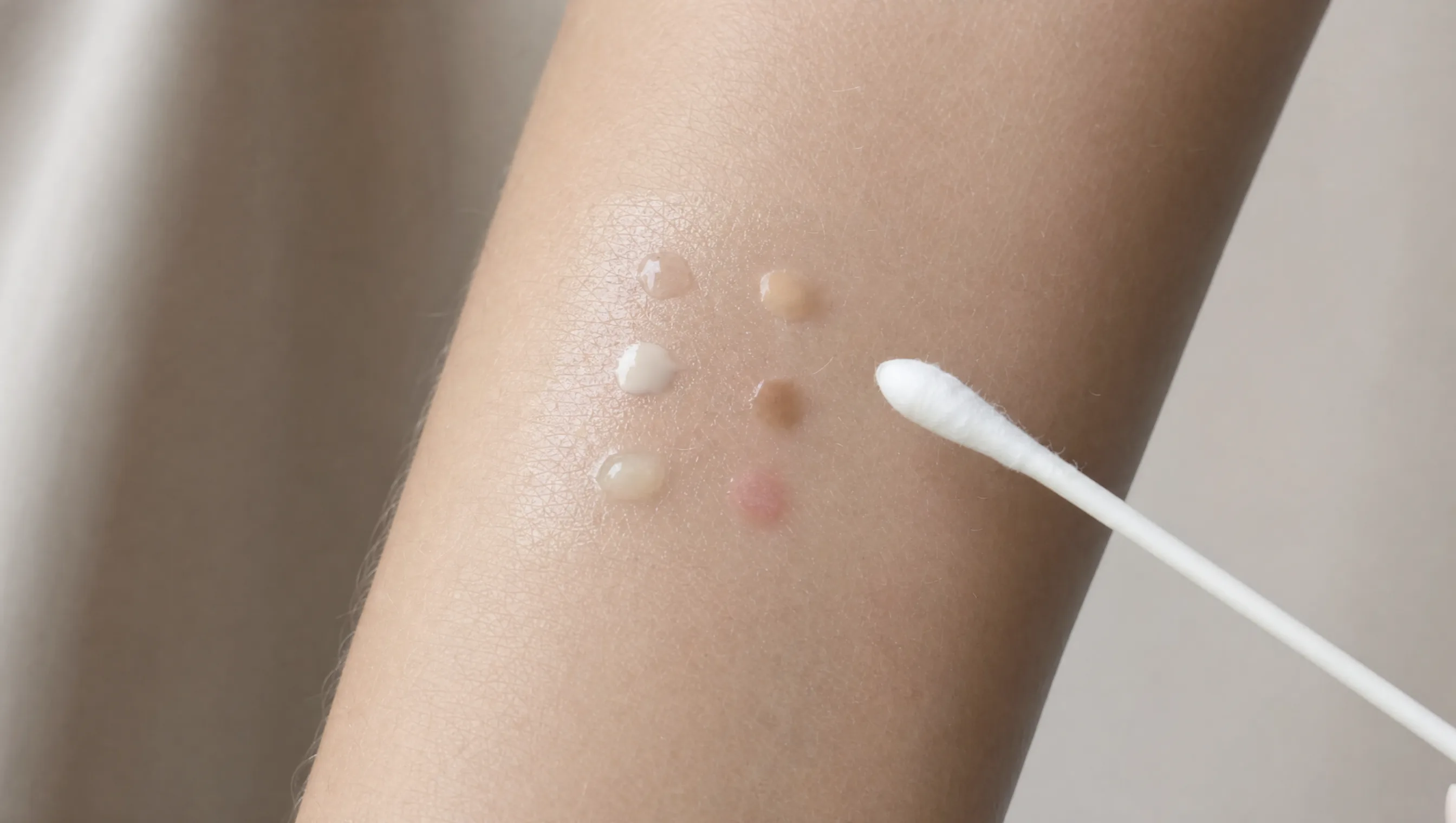
Reintroduce one thing at a time. Add a single new product, use it for at least two weeks, patch test on the inner arm before a small area of face. Keep a simple log — product, date, any reaction — because patterns that aren’t obvious in the moment tend to show up once you look back over a few weeks of notes.
Look for the common thread. Cross-reference anything that caused a reaction. Fragrance/parfum and essential oils, alcohol denat and SD alcohol, sodium lauryl sulfate, methylisothiazolinone and related preservatives, certain plant extracts (lavender, citrus, mint), strong AHAs and BHAs, and retinoids at higher concentrations are the usual suspects worth checking first.
Get help if the pattern doesn’t resolve. If systematic elimination isn’t revealing anything, or you suspect true allergic contact dermatitis, a dermatologist or allergist can run formal patch testing that identifies specific allergens far more reliably than trial and error. An underlying condition like rosacea needs its own treatment, not just avoidance.
Building a routine around it
Once the pattern is clearer, a working routine is genuinely achievable. A fragrance-free, non-foaming cleanser with minimal surfactants — cream or oil-based formats are often better tolerated than gels or foams. A moisturiser with a short ingredient list, no fragrance or essential oils, and barrier-supporting ingredients like ceramides, cholesterol and fatty acids (niacinamide too, if it’s tolerated). A mineral sunscreen, avoiding whichever chemical filters have caused problems before. Actives only once the barrier has genuinely recovered, at the lowest effective concentration, buffered under moisturiser, introduced infrequently at first — the same cautious approach covered in reintroducing actives generally.
Common questions
Is sensitive skin a real medical condition? Not on its own — it’s a description of a symptom that can stem from irritation, allergy, nerve reactivity, an underlying condition, or barrier damage amplifying all of them. Working out which applies to you determines the fix.
Will my skin ever stop being reactive? Sometimes it improves as the barrier recovers and triggers are removed; for some people, sensitivity is a more permanent feature that needs ongoing accommodation rather than a cure.
Should I avoid all active ingredients? Not necessarily forever — but not while the barrier is compromised. Once things have stabilised, actives can often be reintroduced slowly, one at a time, starting low.
How do I know if it’s an allergy rather than irritation? Timing is the biggest clue — allergic reactions tend to appear 24–72 hours after exposure and involve itchy, raised or blistering patches, whereas irritation shows up quickly and looks more like straightforward redness or stinging. A formal patch test from a dermatologist or allergist is the reliable way to confirm it.
The bottom line
“Sensitive skin” covers several different problems that happen to look similar from the outside — irritation, allergy, nerve reactivity, an underlying condition, or a barrier so compromised it amplifies everything. Treating it as one uniform issue with one uniform fix (buy gentler products, hope for the best) rarely gets anyone very far.
The more useful approach is slower and less satisfying: strip the routine back, let the skin genuinely recover, reintroduce one variable at a time, and pay attention to what your reactions are actually telling you. That’s not a shortcut to “normal” skin — it’s a way of finding what your skin, as it actually is, can tolerate. That may look nothing like the routines other people get away with, and that’s fine.