How to Reintroduce Actives After Barrier Damage
Stacking retinol, acids and everything else at once tends to end the same way — a barrier that can't tolerate any of them. Recovery is slower than the damage, and rushing it is how people end up back here.
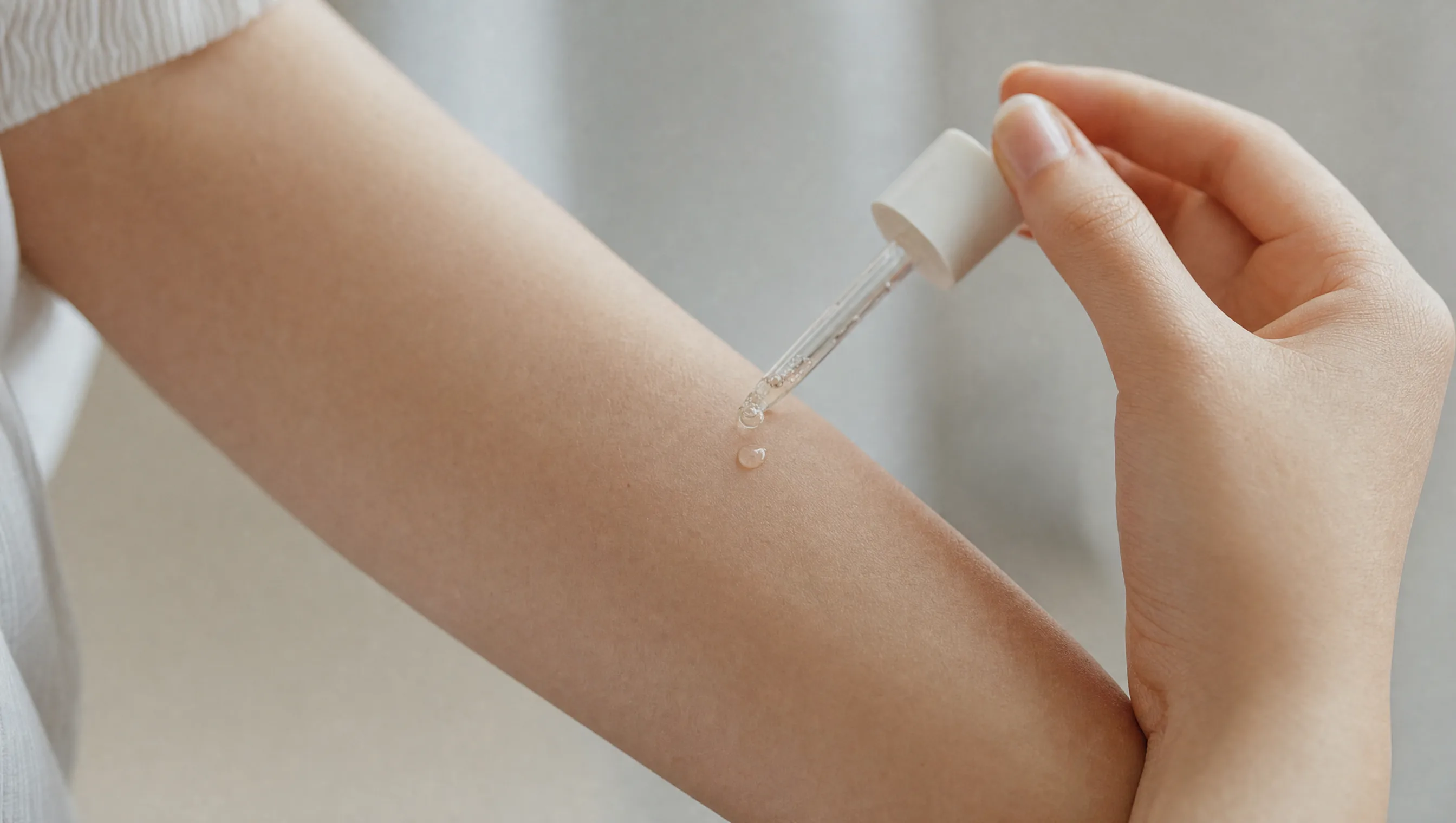
Went too hard on the retinol. Stacked acids on top of acids. Tried three new actives in the same week because they all arrived at once. Whatever the route in, the result tends to look the same — red, flaking, burning skin that reacts to things it used to tolerate without issue. Barrier damage of this kind is common and, with patience, recoverable. What it isn’t is quick, and most relapses happen because someone rushes back to their old routine the moment skin looks calm again rather than because the recovery approach itself failed.
Confirming it’s actually barrier damage
Before planning recovery, it’s worth checking the diagnosis. For a fuller checklist on this, see how to know if your barrier is damaged — but the short version: barrier damage tends to show as a tight, uncomfortable feeling that persists even after moisturising, visible flaking or peeling, sudden sensitivity to products that never used to sting, redness that doesn’t resolve, an unhealthy “waxy” or overly shiny look, dehydration lines (fine lines that appear with water loss rather than age), and sometimes an uptick in breakouts, since a damaged barrier can paradoxically trigger acne rather than prevent it.
It might be something else if the reaction is confined to one specific product (more likely allergy or simple irritation), if there’s swelling or hives alongside it (more likely an allergic reaction), or if nothing improves despite weeks of stopping all actives (worth a dermatologist’s opinion rather than continued self-management).
Phase 1: stop everything (days 1–3)
The first move is aggressive simplification, not a gentler version of your existing routine. Strip down to a gentle, non-foaming cleanser (or water only, if damage is severe), a simple bland moisturiser, and sunscreen during the day. That’s the entire routine for these few days — no retinoids, acids, or vitamin C, no fragranced products, no essential oils, no alcohol-heavy formulas, no physical exfoliation, no hot water on the face. The goal here is reducing every plausible source of additional irritation while the barrier gets a chance to start recovering, not treating anything yet.
Phase 2: barrier repair focus (weeks 1–3)
Once things have stabilised, the focus shifts to actively supporting repair. Ceramides are the core barrier lipid worth prioritising here, alongside cholesterol and fatty acids. Niacinamide supports ceramide synthesis but is worth keeping at lower concentrations (2–5%) while skin is still compromised, since higher strengths can irritate damaged skin. Panthenol offers anti-inflammatory and moisturising benefit; squalane is a genuinely non-irritating emollient; hyaluronic acid helps with hydration, though some people find it stings on very damaged skin and it’s worth testing cautiously; centella asiatica and its actives (often listed as madecassoside) have real anti-inflammatory and healing support behind them. A fuller rundown of options in this category is in ingredients that repair the skin barrier.
A reasonable repair routine: in the morning, gentle cleanser or water rinse, a barrier-supporting serum or moisturiser, then sunscreen — mineral formulas may sit more comfortably than chemical ones during active repair, though this varies by person. In the evening, gentle cleanser, barrier-supporting serum, a rich moisturiser, and an occlusive on top if needed (petroleum jelly or a healing ointment).
Patience genuinely matters here — the stratum corneum takes roughly two to four weeks to fully renew, so this phase can’t be meaningfully compressed. Signs it’s working: less tightness, reduced sensitivity, some return of a healthy look, products that no longer sting on application, and flaking that’s visibly resolving rather than persisting.
Phase 3: testing the waters (week 4 onward)
Once skin feels genuinely resilient again — not just calm for a day or two, but consistently comfortable — tolerance testing can begin. If several actives were in play when the damage happened, some were likely tolerated better than others; start with whichever seems gentlest rather than the one you’re most attached to. The patch-test approach: apply a small amount somewhere low-visibility (jawline, behind the ear), wait 24–48 hours, then try a small area of the face if there’s no reaction, expanding cautiously from there. Reintroduce only one product every one to two weeks — if a problem recurs, you’ll actually know what caused it, which is the whole point of going slowly.
Phase 4: reintroducing actives (week 5 onward)
When actives do come back, they should come back differently than they left.
Lower concentration. If 1% retinol caused the original problem, restart at 0.25% or 0.3%. If 10% glycolic acid was too much, try 5%. Concentration can always increase later — starting high and re-damaging the barrier wastes considerably more time than starting conservatively.
Lower frequency. If nightly retinol was the cause, restart at once or twice weekly and build over months rather than weeks. A reasonable schedule: once weekly by week one, twice weekly by week three, three times weekly by week five, with a fuller assessment at week eight of whether more frequent use is actually needed.
Buffering. Applying an active over moisturiser rather than directly onto bare skin reduces penetration and intensity, giving skin more room to adjust — see the layering guide for how buffering fits into a fuller routine order.
Shorter contact time. For exfoliating acids specifically, a wash-off format or a brief application time before moving to leave-on versions is a gentler reintroduction than going straight back to an overnight leave-on product.
The mistake that causes most relapses
A lot of barrier damage happens from stacking too many actives on the same night, and the instinct on reintroduction is often to slot straight back into that same multi-active routine once skin feels better. Don’t. A rotation that prevents accumulation works better — something like retinoid on Monday, recovery (moisturiser only) on Tuesday, an exfoliating acid on Wednesday, recovery Thursday, retinoid Friday, recovery through the weekend. That still delivers active benefit while giving skin genuine recovery time between applications, rather than compounding load night after night.
What tends to cause this in the first place
Retinoids are the most common cause, usually from introducing them too quickly or at too high a starting concentration. Reintroduction should go lower and slower, with buffering until skin has genuinely adjusted.
Exfoliating acids (AHAs/BHAs) damage the barrier through overuse or excessive concentration rather than any inherent problem with the category. Lower strength, less frequent use, and considering a time-limited rather than leave-on format all reduce the risk on reintroduction.
Vitamin C (L-ascorbic acid), because of its low pH, can irritate on its own and especially in combination with other actives. A gentler derivative and avoiding same-night use with acids both help.
Benzoyl peroxide is genuinely effective but also genuinely drying. Lower percentages, shorter contact time (“contact therapy” — applying briefly then washing off), and consistent moisturising all reduce the risk of repeat damage.
Physical exfoliation — scrubs, devices — can simply be too abrasive for the skin it’s used on. Limiting to once weekly at most, using genuinely gentle pressure, and questioning whether it’s needed at all are all reasonable on reintroduction.
When something just isn’t right for your skin
Sometimes an ingredient doesn’t work for a given person, full stop, regardless of how carefully it’s reintroduced. Persistent irritation even at low concentration and low frequency, immediate stinging with each application, no improvement despite months of careful use, or anything that looks allergic (rash, hives) are all signs worth taking seriously rather than pushing through. Not everyone needs every active — see why some people react to everything for more on why tolerance varies this much between individuals. If retinol consistently damages your barrier despite a careful approach, it may genuinely not be worth continuing to fight for; alternatives like bakuchiol exist for a reason.
Staying out of this cycle going forward
Once recovered, a few habits reduce the odds of ending up back here. Keep actives at a moderate level rather than maximal — a consistent, moderate routine outperforms an aggressive one that damages the barrier every few months. Pay attention to what skin is actually telling you, since seasonal change, stress, illness, and hormonal shifts all affect tolerance and sometimes call for a temporary step back — seasonal skincare covers some of that variation. Keep barrier-supportive ingredients like ceramides in the routine even alongside actives, not just during a recovery phase. And resist adding more than one new product at a time — new-product excitement is a common route back into an overcrowded, barrier-stressing routine.
The recovery timeline, roughly
Days 1–3: stop all actives, simplify hard. Weeks 1–3: focus on barrier repair. Week 4 onward: begin testing tolerance. Weeks 5–8 and beyond: slowly reintroduce actives. Months 2–3 and beyond: build back toward a moderate, sustainable routine. Total recovery for significant barrier damage typically runs 8–12 weeks — sometimes longer, rarely much shorter.
The bottom line
Barrier damage is frustrating but almost always recoverable, and the main variable within your control is patience — rushing the process is what extends it. Once the barrier is genuinely healthy again, treat it more gently than before rather than picking up exactly where you left off. The products that caused the damage usually weren’t inherently dangerous; they were used too aggressively, too quickly, or in combinations that overwhelmed what skin could handle at the time. A resilient barrier tolerates active ingredients reasonably well. A damaged one tolerates almost nothing. Prioritise the former, and everything else you want to add sits on a foundation that can actually support it.