Dehydrated vs Dry Skin: They're Not the Same
"Dry skin" gets used as a catch-all for anything that doesn't feel moisturised enough, but dry and dehydrated are different problems with different fixes. Treating one as the other is a common reason routines stop working.
Someone with genuinely oily skin can be dehydrated. Someone with permanently dry skin can also be well hydrated. The two words get used interchangeably in most skincare conversations, but they describe different problems, with different causes and different fixes — and confusing them is one of the more common reasons a “moisturising” routine doesn’t actually solve anything.
The distinction, in short
Dry skin is a skin type: it lacks oil, because the sebaceous glands genuinely don’t produce enough sebum. It’s largely genetic, tends to worsen with age as sebum production naturally declines, and it doesn’t go away — it’s managed, not cured.
Dehydrated skin is a temporary condition: it lacks water in the stratum corneum, and it can happen to anyone regardless of skin type — including skin that’s simultaneously producing plenty of oil. Unlike dry skin, dehydration is fixable with the right care, usually within weeks.
That distinction sounds simple, but it changes what “fixing” your skin actually requires.
Reading the signs
Dry skin tends to show up as tightness (especially after cleansing), a rough or flaky texture, small-looking pores, a somewhat dull complexion, and fine lines that look deeper than they are — plus skin that rarely, if ever, gets oily even in warm weather. It’s a fairly constant state rather than something that fluctuates day to day.
Dehydrated skin looks different: tight, but sometimes oily at the same time; reduced “bounce” or elasticity; makeup that sits poorly or looks cakey; fine lines that appear more prominent temporarily rather than permanently; and a condition that varies — better some days, worse others, often tracking environmental changes or a recent product switch.
A rough gauge, not a diagnosis: gently pinch the skin on your cheek. Well-hydrated skin springs back immediately; dehydrated skin holds the pinched shape for a moment before releasing. It’s indicative rather than definitive, but it’s a useful sanity check.
The confusing combination: oily and dehydrated at once
This trips a lot of people up. Oil production and water content are separate systems, so it’s entirely possible to have too much of one and not enough of the other — oily, and also tight, dull and uncomfortable. That combination often pushes people toward over-cleansing and skipping moisturiser altogether, on the assumption that oily skin doesn’t need hydrating. It’s close to the opposite of what actually helps.
What causes each
Dry skin type traces mainly to genetics, with age, hormonal shifts and cold climates making it more pronounced. Dehydration has a longer list of triggers: over-cleansing, harsh surfactants or high-alcohol products, over-exfoliation, dry air, wind, air conditioning or central heating, certain medications, and — underlying a lot of stubborn cases — a compromised barrier that’s no longer holding water in the way it should. If dehydration keeps returning despite a sensible routine, the barrier itself is worth investigating rather than just adding more hydrating serum on top.
Treating dry skin: oil and barrier support
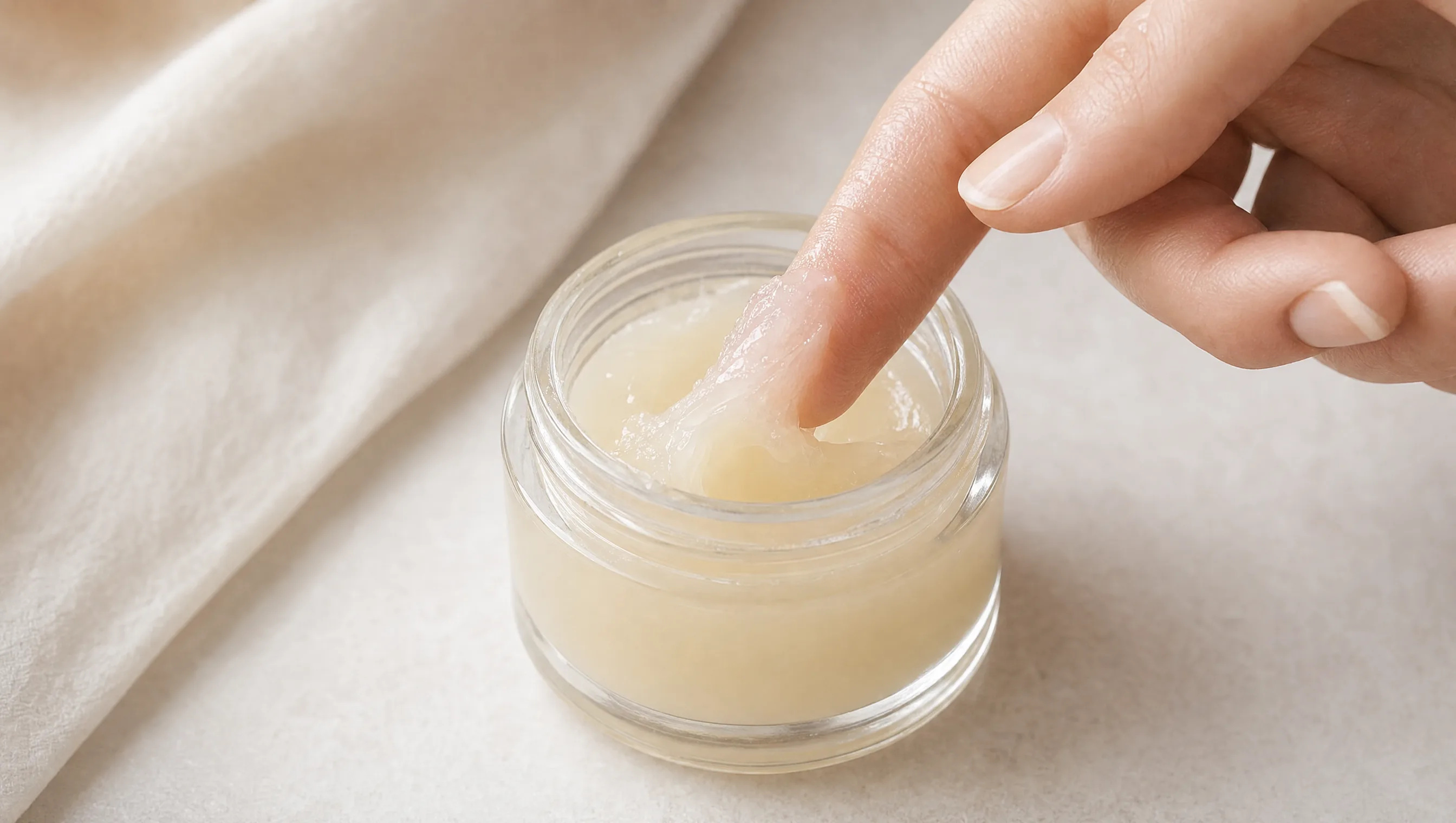
Dry skin responds to emollients that soften and fill gaps between cells — squalane, jojoba oil, shea butter, fatty alcohols — and occlusives that slow water loss, from petrolatum through to silicones and heavy plant butters — slugging, a heavy occlusive layer over the whole routine at night, takes this to its logical extreme for skin that needs it. Barrier lipids matter here too: ceramides, cholesterol and fatty acids replace what dry skin genuinely doesn’t produce enough of, and richer water-in-oil emulsions, facial oils and dedicated barrier-repair creams tend to suit this skin type better than anything marketed as “lightweight”. The underlying approach — cleanse gently, layer a rich moisturiser, add oil or occlusive on top if needed, sunscreen in the morning — doesn’t change with the seasons so much as intensify in winter.
Treating dehydrated skin: water, then a seal
Dehydration needs humectants to draw water into the stratum corneum — hyaluronic acid, glycerin, urea, propanediol, sodium PCA — followed by something to stop that water evaporating straight back out. Occlusives here can be much lighter than for genuinely dry skin; squalane or a light silicone is usually enough unless dryness is also present. Hydrating serums, essences applied to damp skin, and lightweight humectant-based moisturisers all fit this brief.
One detail that trips people up: humectants pull water from wherever is available, including the air. In low-humidity environments, that can mean pulling water from your own skin and releasing it outward — the opposite of the intended effect. The fix is straightforward: always follow a humectant with an occlusive, even a light one, so the water it draws in has somewhere to stay.
When you’re both
Plenty of people are dry (skin type) and dehydrated (temporary condition) at the same time, which needs addressing in order rather than all at once: water first via humectants, oil second via emollients and barrier lipids, then seal everything in with an occlusive. Getting the sequence backwards — oil before water — tends to trap the existing dryness rather than resolve it.
If dehydration is the recurring problem, it’s worth addressing the cause directly rather than just layering on more hydrating products: cut back over-cleansing, pause harsh actives temporarily, consider a humidifier in dry indoor air, and lean on barrier-repair ingredients if the barrier itself looks compromised. Expect two to four weeks before dehydration meaningfully resolves, even with the right routine. Dry skin, by contrast, isn’t something to “fix” once — it’s ongoing management: consistent lipid-rich care, heavier products through winter, and accepting that a gentle, non-stripping routine is permanent rather than a temporary phase.
Mistakes worth avoiding
Piling on facial oils for dehydrated skin without adding water first doesn’t solve anything — oil alone can’t rehydrate what’s already lacking water. Skipping moisturiser because skin looks oily perpetuates dehydration rather than fixing it; a lightweight, water-based moisturiser is still necessary. Exfoliating flaky, dehydrated skin usually makes it worse, since the flaking is often a symptom of dehydration rather than a build-up of dead skin needing removal. And using hyaluronic acid without an occlusive on top wastes most of its benefit — without something to seal it in, the water it draws simply evaporates again.
Common questions
Can dry skin become dehydrated too? Yes, easily — dry skin’s already-thin oil layer offers less natural protection against water loss, so it’s actually more prone to dehydration on top of its baseline dryness, not less.
Will drinking more water fix dehydrated skin? Marginally, if at all. Skin hydration is driven far more by what’s applied topically and how well the barrier holds water in than by fluid intake — useful for overall health, not a fix for dehydrated skin on its own.
How do I know if it’s dehydration or barrier damage? They overlap significantly — barrier damage often causes dehydration as a symptom. If dehydration keeps recurring despite consistent humectant and occlusive use, check the barrier itself rather than continuing to treat it as a standalone hydration issue.
The bottom line
Dry skin lacks oil and needs consistent lipid-rich care as an ongoing skin-type management strategy. Dehydrated skin lacks water and needs humectants sealed in by an occlusive, and it should genuinely resolve within weeks once the cause is addressed. Plenty of people have both, which means treating both, in the right order. If a routine aimed at “dry skin” hasn’t worked, it’s worth asking honestly whether the actual problem was dehydration all along — the distinction isn’t semantic, it changes which ingredients are worth your money.