Squalane: What It Does and Doesn't Do
Squalane has become a skincare staple — a go-to oil for those who don't like oils, a moisturising ingredient that seems to work for everyone.
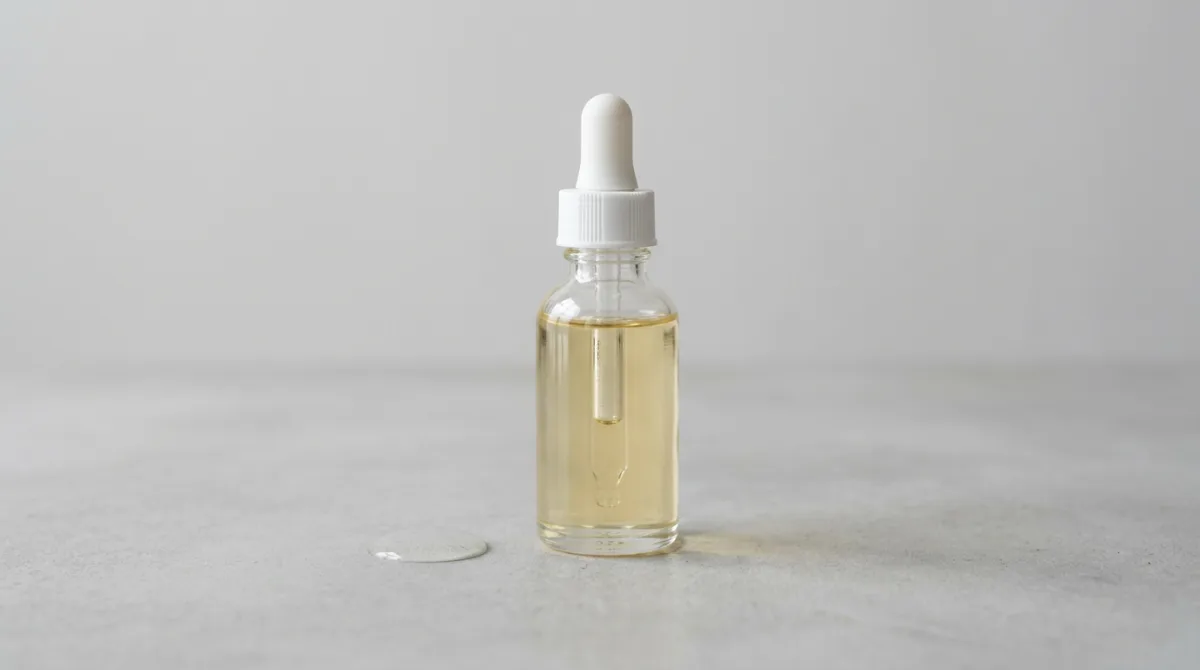
Squalane turns up in nearly every “oil for people who hate oils” recommendation, and the reputation is mostly earned. It’s lightweight, it’s stable, and it doesn’t seem to upset anyone’s skin. What it isn’t is a treatment ingredient — and the gap between what squalane actually does and what the marketing implies is worth closing before you buy a bottle.
Squalane vs squalene: one letter, two different things
The spelling isn’t a typo either way.
Squalene (with an ‘e’) is a lipid your own sebaceous glands produce as part of your skin’s natural moisture barrier. It’s also chemically unstable — left exposed to air, it oxidises fast, which is a problem for anyone trying to bottle it.
Squalane (with an ‘a’) is the hydrogenated, stabilised version. Hydrogenation removes the double bonds that made squalene prone to oxidising, which is what makes it viable to put in a jar and sell. When a product lists “squalane” on the ingredients panel, this is what you’re getting.
What it actually is
Technically, squalane is a saturated hydrocarbon, not an oil — an oil in the strict sense is a triglyceride, and squalane isn’t. In practice, though, it behaves like a lightweight oil on skin, which is why it gets marketed and used as one.
Where it comes from: shark liver used to be the standard source, now largely abandoned on sustainability and ethical grounds. Today most squalane is plant-derived — olive is the most common source, with sugarcane and rice bran also used. Chemically, plant-derived squalane is identical to the shark-derived version. The source is a sustainability question, not a performance one.
What it does for skin
It’s an emollient. Squalane fills in the microscopic gaps between skin cells, which smooths the surface and softens rough texture. Fine lines look temporarily less pronounced because the surface is smoother — this is a cosmetic, appearance-level effect, not a structural change to the skin.
It moisturises without heavy occlusion. Unlike thick occlusives such as petroleum jelly, squalane is light enough to penetrate into the stratum corneum rather than just sitting on top. It supplements your skin’s own lipids, supports barrier function, and adds moisture without the greasy finish that puts a lot of people off facial oils.
It’s tolerated by almost everyone. Non-comedogenic, low irritation potential, works across oily, dry, sensitive and acne-prone skin, and plays nicely alongside most other ingredients. This is one of the reasons it’s become such a default recommendation — there’s very little downside risk.
It doesn’t go off. No oxidation, no rancidity, a genuinely long shelf life, and no special packaging requirements. Compare that to something like rosehip oil, which needs to be kept away from light and air.
What squalane doesn’t do
This is the part the marketing tends to skip.
Squalane is a moisturising ingredient, not an active. It won’t clear acne, won’t meaningfully reduce wrinkles beyond that temporary smoothing effect, won’t fade pigmentation, won’t speed up cell turnover, and doesn’t offer the antioxidant protection some marketing implies. Any product claiming squalane “treats” or “fixes” a specific skin concern is overstating what a single emollient ingredient can do — there’s no evidence for treatment-level claims, only for its role as a moisturiser and skin-feel improver.
It’s also not a complete moisturiser on its own. Proper hydration usually needs three things working together: humectants that draw water in (glycerin, hyaluronic acid), emollients that smooth and soften (squalane sits here), and occlusives that stop water escaping (petrolatum, heavier oils). Squalane alone covers one of those three jobs. For genuinely dry skin, pairing it with a humectant and/or an occlusive will get better results than squalane on its own.
And no, it won’t “train” your skin to produce less sebum. Applying something that mimics aspects of your own sebum doesn’t send a signal to your glands to scale back oil production — that idea persists online but isn’t backed by evidence.
How to actually use it
Apply squalane after water-based products and before heavier creams or occlusives — the standard thin-to-thick layering rule applies here as much as anywhere. A few drops covers the whole face; it’s concentrated enough that more isn’t better.
On its own, it works well: as a final layer to lock in hydration, mixed into a moisturiser to boost richness, pressed into damp skin to help seal in water, or dabbed onto dry patches as a targeted emollient. It also turns up as an ingredient inside serums, moisturisers, cleansing oils and even makeup, usually as the carrier or the smoothing component.
Where it works best: combination and oily skin (light enough not to trigger breakouts), sensitive skin (rarely reactive), and anyone who’s tried facial oils before and disliked the heavy, greasy feel.
Where it’s not quite enough alone: very dry skin, which needs more occlusion than squalane provides by itself, and anyone expecting it to address an active skin concern rather than just moisturise.
How it compares to other facial oils
Jojoba oil is technically a wax ester and tends to feel slightly heavier on skin; squalane absorbs faster. Rosehip oil carries fatty acids and vitamin A derivatives with more treatment-adjacent potential, which makes it a more “active” choice than squalane’s simpler, pure-moisture profile. Marula oil is richer and brings antioxidant properties squalane doesn’t have. Argan oil is heavier again, with a distinct scent, where squalane is odourless and light.
None of these is objectively “better” — it depends whether you want an emollient that does nothing else (squalane) or an oil that’s doing double duty as a mild active (rosehip, marula).
Common questions
Will it make me break out? Unlikely. It’s non-comedogenic and tolerated well even by acne-prone skin, though as with anything, individual reactions can happen.
Is it enough on its own? For oily or combination skin in a mild climate, often yes. For dry skin, or in a cold or dry climate, pair it with a humectant and consider an occlusive layer too.
Does the source matter? Not for how it performs on skin — olive-derived and sugarcane-derived squalane are chemically identical. Source is a sustainability preference, not a performance difference.
How much should I use? A few drops. It goes further than most people expect.
What to look for when buying
A pure squalane product should list little beyond squalane itself, possibly with a stabiliser like vitamin E — check the ingredient list, because some products sold as “squalane oil” are actually blends. Where squalane appears as one ingredient among many in a wider formulation, its position on the ingredient list gives a rough sense of concentration. Purity also varies by grade: pharmaceutical-grade squalane tends to be cleaner, while lower grades can carry a faint odour or slight inconsistency batch to batch.
The bottom line
Squalane earns its popularity honestly: it’s light, shelf-stable, broadly tolerated, and genuinely good at the one job it does. It isn’t a treatment ingredient and won’t do the work of a retinoid, an antioxidant serum, or a dedicated barrier-support product — it’s a supporting player, not the star.
Used for what it is — a very good emollient, layered alongside ingredients that actually target your specific concerns — squalane is a low-risk, easy addition to most routines. Just don’t expect it to do more than moisturise.