The Preservative Debate: Safety vs Shelf Life
"Preservative-free" is marketed as inherently safer, but a water-based product with no preservation is often the riskier bottle on the shelf. The chemistry says otherwise.
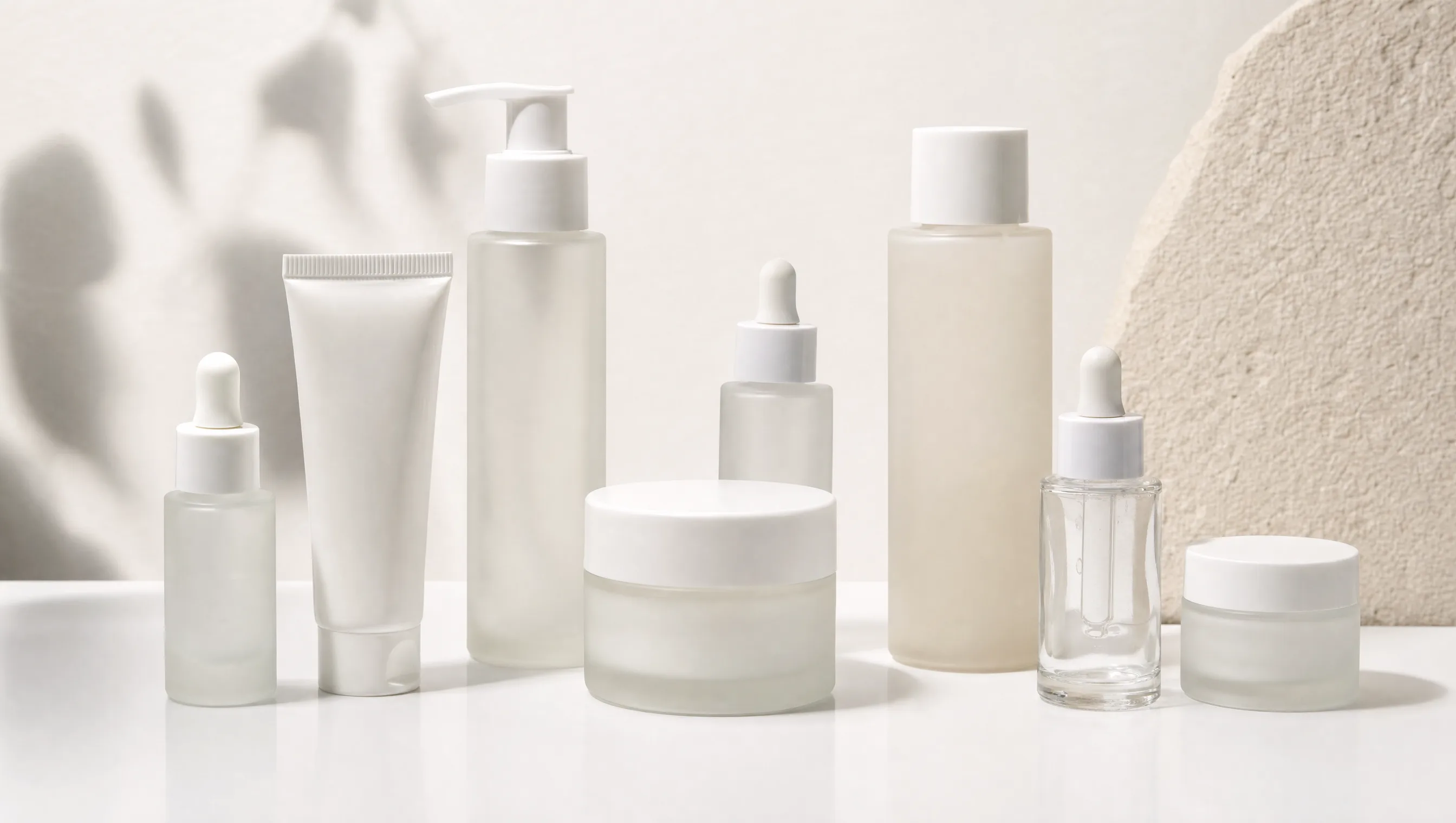
“Preservative-free” sells. It sits on packaging next to “clean” and “natural” as shorthand for safer, gentler, better for you. The chemistry doesn’t cooperate with that story. A water-based product with no meaningful preservation isn’t a purer version of a preserved one — it’s a growth medium waiting for something to move in.
Why products need preservatives at all
Most cosmetic formulas are, from a microbe’s point of view, a decent place to live: water, plant extracts and proteins to feed on, a pH many bacteria and fungi are comfortable in, and a bathroom shelf that’s warm and humid for a good part of the day. Left unprotected, that combination doesn’t stay clean for long, and contamination doesn’t announce itself — a jar can harbour bacteria while looking, smelling, and feeling completely normal.
The organisms that turn up aren’t always harmless either. Pseudomonas aeruginosa and Staphylococcus aureus are among the more concerning contaminants, and applying either near the eyes carries a real risk — Pseudomonas keratitis is a genuine cause of vision loss, not a hypothetical worst case. That’s a different conversation from skin’s own resident bacteria, which a well-designed preservative system isn’t trying to wipe out — see our piece on the skin microbiome for how that balance works.
Working through the preservatives by reputation, not headline
Parabens
Parabens are the preservative everyone’s heard is “bad,” and also among the best-studied, longest-used ingredients in cosmetic chemistry — over 70 years of use, effective at low concentrations, broad-spectrum against bacteria and fungi, and low rates of sensitisation.
The concern that put them on trial is genuine but overstated: parabens show weak estrogenic activity in vitro, and an early, contested study raised a possible link to breast cancer. Later research hasn’t supported a causal connection, and the estrogenic activity itself is roughly 10,000 to 100,000 times weaker than the body’s own oestrogen — at the concentrations actually used in cosmetics, the hormonal effect is negligible. The reputational damage seems to have outpaced the evidence.
Phenoxyethanol
The preservative that filled the gap when brands started marketing “paraben-free,” phenoxyethanol is generally well tolerated and effective against bacteria, though weaker against fungi, which is why it’s often paired with something else. It isn’t inherently safer than parabens — it’s simply different, and its rise looks more like a market response to paraben anxiety than a genuine safety upgrade.
Benzyl alcohol
A “natural-identical” preservative that occurs in some fruits and essential oils, benzyl alcohol works well at the right concentration but can irritate at higher ones, and some people become sensitised to it over time. Being naturally occurring doesn’t make it gentler — it’s a functional preservative with its own downsides, same as any other.
Formaldehyde releasers
DMDM hydantoin, imidazolidinyl urea, diazolidinyl urea and quaternium-15 preserve by releasing small amounts of formaldehyde over time. Formaldehyde is a known carcinogen at high exposure, which sounds alarming until you look at the doses involved — at cosmetic use levels, the amount released sits well below hazardous thresholds. The more defensible objection is sensitisation: these preservatives cause more allergic reactions than parabens do, which is a reasonable basis for preferring alternatives even though the cancer framing tends to dominate the conversation.
Methylisothiazolinone (MI) and methylchloroisothiazolinone (MCI)
This is the cautionary tale in the preservative story. MI and MCI moved in as parabens fell out of favour, then contact dermatitis rates climbed sharply enough that the EU restricted their use in leave-on products. The “safer” replacement turned out to cause more skin reactions than what it replaced — a useful reminder that “not a paraben” isn’t the same as “an improvement.”
Natural preservation systems
Combinations of plant-derived antimicrobials (rosemary and thyme extracts are common), fermentation products, and high concentrations of multifunctional ingredients like glycols can preserve a formula, but they generally need higher concentrations, more careful combination, and shorter shelf lives than synthetic systems to do the job reliably. Done well, natural preservation works. Done cheaply, a poorly preserved “natural” product can pose more contamination risk than a well-preserved conventional one — the label tells you the ingredient philosophy, not whether the microbiology behind it was competent.
When products genuinely don’t need preservatives
Some formats sidestep the problem rather than solving it. Anhydrous products — pure oils, oil-based serums, balms — have little water for microbes to exploit, though they may still need antioxidants to prevent oxidative rancidity, which is a different problem entirely. Single-use ampoules opened and used immediately don’t accumulate the repeated exposure that preservation protects against. High-alcohol formulas can be self-preserving, at the cost of being more drying. Extreme pH, very acidic or very alkaline, can suppress microbial growth but may irritate skin in the process. None of these are loopholes — they’re products where the underlying risk genuinely differs.
A water-based product claiming to be preservative-free is a different situation, and worth a moment’s scepticism: what’s actually preventing contamination, has it been challenge-tested, and what’s the realistic shelf life? Some brands preserve their formulas using multifunctional ingredients or preservative-like botanicals that don’t fall under the legal definition of “preservative,” which lets them make the claim technically while the product is, in practice, still protected. That’s not necessarily deceptive, but it’s worth knowing the claim is doing more marketing work than chemistry work.
Testing, packaging, and the parts you don’t see
Reputable manufacturers run challenge tests — deliberately inoculating a product with microorganisms and measuring whether levels fall over time — before claiming a product resists contamination. Standards vary between brands and regions, though, so “challenge tested” is reassuring without being a guarantee of identical protection everywhere it appears.
Packaging changes the risk profile too. Jars carry the highest contamination risk, since fingers go directly into the product and a large surface sits exposed to air each time it’s opened. Tubes are lower risk because product flows out with minimal backflow. Pumps improve on that by dispensing without contact, and airless pumps go further still, keeping air and fingers out entirely — which is part of why airless-packaged products can sometimes get away with less aggressive preservation.
Even a well-preserved product isn’t proof against how it’s used, though. Repeated finger-dipping into jars, use well past expiry, storage in a hot, humid bathroom, sharing a product between people, or leaving lids off all push past what a preservative system is designed to handle. Preservation protects against reasonable use — it isn’t a substitute for basic hygiene.
Common questions
Are parabens actually dangerous? The evidence doesn’t support that. Their estrogenic activity is many orders of magnitude weaker than the body’s own hormones, and no causal cancer link has held up under further study. Their reputation seems driven more by marketing than by the underlying research.
Is “preservative-free” ever a red flag? For water-based products, yes — worth asking how contamination is being prevented rather than assuming the label means safer.
Does a long shelf life mean a product is over-preserved? Not necessarily. A 12–24 month shelf life generally suggests adequate preservation; much longer than that may mean a more aggressive system, and a much shorter one may simply reflect a lighter-preservation product designed to be used up quickly.
Do I need to worry about my skincare going off between uses? Mostly not, if you’re using products hygienically and within their stated shelf life — but a jar you dip into daily deserves more caution than a pump you never touch with your fingers.
Where that leaves you
The preservative debate isn’t really “preservatives versus no preservatives” — it’s how to preserve effectively while minimising sensitisation, and how to match preservation strength to product type and packaging, another facet of why formulation changes ingredient results beyond just the actives themselves. Parabens remain one of the safer, better-evidenced options despite their reputation; some of their replacements have turned out to be worse on the metric that actually matters, skin reactions. Treat “preservative-free” on a water-based product as a question rather than a reassurance, respect expiry dates, favour tubes and pumps over jars where you can, and use products the way they’re meant to be used. Good preservation isn’t something to avoid — it’s the thing making the rest of the formula safe to put on your face.