Copper Peptides: The Evidence-Based Guide
Of all the peptides sold on anti-ageing claims, copper peptides (GHK-Cu) have the strongest research behind them — genuine wound-healing evidence, and cosmetic trial data that's real but more modest than the marketing suggests.
Among the sprawling and unevenly-evidenced world of skincare peptides, copper peptides stand out for having something most of the category lacks: a genuine, decades-deep research trail. That doesn’t mean the marketing claims built on top of that research are accurate — it just means there’s real evidence worth reading properly, rather than dismissing outright or taking on faith.
What copper peptides actually are
The peptide is GHK-Cu — glycyl-L-histidyl-L-lysine bound to a copper ion — a naturally occurring compound found in human plasma, saliva, and urine, first isolated from plasma in the 1970s. The copper isn’t incidental. The peptide-copper complex has distinct biological activity that the peptide alone doesn’t show, which is part of why it’s been studied more seriously than most cosmetic peptides.
The mechanisms, as best understood
GHK-Cu appears to work through several overlapping pathways, though the full picture is still being worked out.
Gene expression. Research suggests GHK-Cu influences expression of genes involved in tissue repair — collagen synthesis, glycosaminoglycan production (including hyaluronic acid), antioxidant enzyme activity, anti-inflammatory responses, and tissue-remodelling enzymes. This broad signalling role is what makes copper peptides interesting scientifically: they seem to act more like a messenger than a raw building block.
Wound healing. This is where the evidence is strongest by a clear margin. Multiple studies show accelerated wound closure, improved tissue remodelling, better collagen organisation, and enhanced blood vessel formation with topical GHK-Cu. It’s not directly a cosmetic result, but it’s solid evidence of genuine biological activity — a foundation the cosmetic claims are built on, even if the translation isn’t automatic.
Antioxidant and anti-inflammatory activity. GHK-Cu can sequester free copper ions that might otherwise drive oxidative damage, functioning as an indirect antioxidant, and appears to modulate inflammatory responses in a way that may calm irritated skin.
Collagen and elastin. Cell culture studies show GHK-Cu can stimulate fibroblasts to increase production of these structural proteins. Whether that translates into visible skin improvement is the harder question, and the one the cosmetic trials try — with mixed success — to answer.
What the cosmetic evidence actually shows
The cosmetic evidence is thinner than the wound-healing evidence, but not absent.
A few clinical trials report measurable improvements in the appearance of fine lines and wrinkles with twice-daily GHK-Cu application over 8–12 weeks — modest but statistically significant effects. Some studies show improved skin density and elasticity measurements, consistent with genuine collagen stimulation. One often-cited study found GHK-Cu comparable to tretinoin for increasing collagen production in aged skin — a notable result, but one from a study with real limitations that hasn’t been robustly replicated, so it’s worth treating as an interesting data point rather than a settled equivalence.
The limitations across this evidence base are worth naming plainly: small sample sizes (dozens of participants, not hundreds), a meaningful chunk of the funding coming from companies selling copper peptide products, the usual publication bias toward positive results, inconsistent formulations and concentrations across studies making comparison difficult, and short trial durations (8–12 weeks) that say little about long-term effects. None of that means the effect is fake — it means the effect size and clinical significance are probably smaller than the marketing implies.
Concentration and why it’s hard to judge from a label
Effective concentrations in the research generally sit between 0.1% and 3% GHK-Cu, though there’s some evidence that very high concentrations may actually underperform moderate ones — possibly a receptor-saturation effect. Unlike tretinoin, which has standardised strengths (0.025%, 0.05%, 0.1%), copper peptide products don’t follow any agreed convention. “Contains copper peptides” on a label could mean 0.01% or 2%, and there’s usually no way to tell which.
Formulation matters more than usual here
GHK-Cu is genuinely fussy to formulate with. It can degrade over time, particularly in acidic conditions or alongside certain other ingredients — a well-formulated product protects against this, a poorly formulated one may deliver a largely degraded peptide by the time it reaches your skin. It works best at neutral to slightly acidic pH, around 5–6; the very low pH needed for L-ascorbic acid can destabilise the peptide-copper complex and cut into its efficacy. Being water-soluble at around 400 Daltons, it penetrates reasonably well without needing exotic delivery technology, reaching the living layers of skin rather than the bloodstream, though encapsulation may help with stability in some formulas.
Copper peptides are generally best kept separate from L-ascorbic acid (pH mismatch, plus copper can catalyse vitamin C oxidation) and used cautiously alongside high-concentration AHAs/BHAs, which may interfere with the peptide’s stability. Some sources suggest caution with strong retinoids too, though the evidence for a real interaction there is thin. In practice, using copper peptides at a different time of day from these actives sidesteps the issue without much sacrifice.
Fitting them into a routine
Apply after cleansing and toning, before moisturiser — many people default to evening use, partly to sidestep any theoretical clash with morning vitamin C. Daily use is typical, though some people alternate with other actives. Results, where they show up, take the usual 8–12 weeks to become apparent; this isn’t an ingredient that rewards impatience. See the layering guide for how this slots in alongside niacinamide, hyaluronic acid, and moisturising ingredients, all of which copper peptides play well with.
Realistic expectations
What copper peptides probably can do: contribute modest improvements in the appearance of fine lines and wrinkles, support skin barrier function, aid overall skin repair, and complement other anti-ageing ingredients. What they probably can’t do: replace tretinoin for serious anti-ageing concerns, produce dramatic or overnight change, meaningfully restructure significantly aged or sun-damaged skin, or work as a standalone solution for anything beyond mild concerns. They’re a supporting player, not a headline act — genuinely useful in the right routine, not transformative on their own.
Who might benefit
Worth considering for people looking to add anti-ageing support beyond retinoids, those who can’t tolerate retinoids at all, anyone with sensitised or barrier-compromised skin (copper peptides are generally well-tolerated), and people already using vitamin C who want a complementary evening step. Less essential for young skin with no ageing concerns, anyone already getting good results from a simpler routine, or people trying to pare back an already-crowded active-ingredient list.
Choosing a product
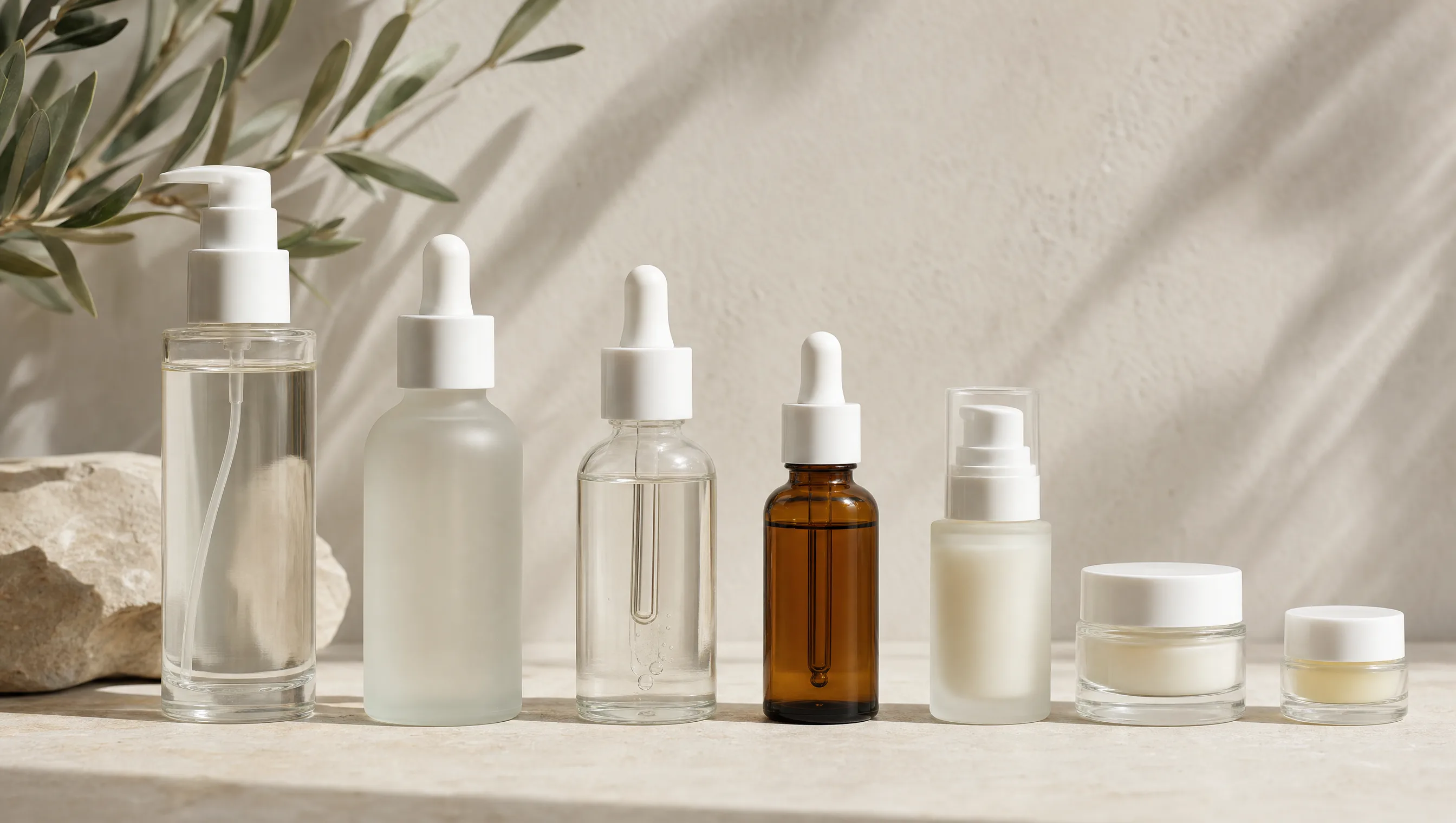
Look for GHK-Cu or copper tripeptide-1 positioned reasonably high in the ingredient list, opaque or protective packaging rather than a clear bottle sitting in daylight, and a formula at an appropriate pH. Be wary of copper peptides buried near the end of a long list (likely trivial amounts), claims like “better than Botox,” and combination products stacking copper peptides against high-concentration acids or vitamin C without addressing the conflict. Serums typically allow higher concentrations and more targeted application; moisturisers with copper peptides are more convenient but usually more dilute.
The bottom line
Copper peptides are among the better-researched entries in the peptide category — genuine mechanisms, real clinical evidence for cosmetic benefit, and a wound-healing pedigree most other peptides can’t claim. They’re not as thoroughly proven as tretinoin or L-ascorbic acid, and they’re not merely marketing hype either. Used thoughtfully — at a reasonable concentration, kept apart from ingredients that destabilise them, with expectations calibrated to “modest support” rather than “transformation” — they’re a reasonable addition to an anti-ageing routine for people who want to build on the basics, not a replacement for them.