Oil-Soluble vs Water-Soluble: Why It Matters for Layering
'Apply thin to thick' is the standard layering advice, but it's really a proxy for something more specific: which ingredients dissolve in water and which dissolve in oil. Understanding solubility explains why routines pill, why some products don't absorb, and how to fix both.
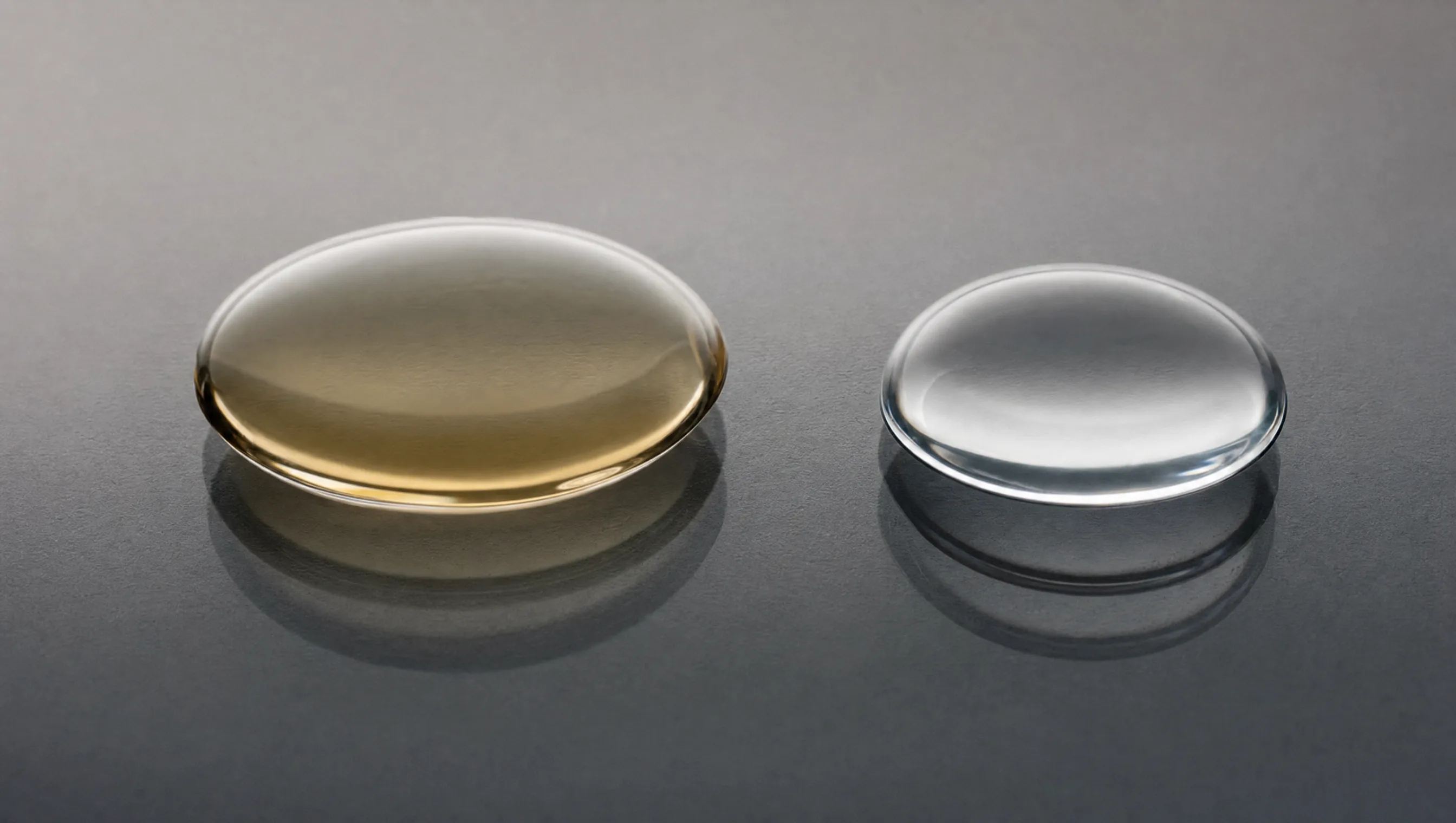
“Apply products thin to thick” is the layering advice everyone’s heard, and it isn’t wrong — it’s just a rough proxy for something more precise underneath it. What actually governs whether products layer well, absorb properly, or pill on your face is solubility: which ingredients dissolve in water, which dissolve in oil, and what that means for how they’re formulated and applied.
The basic categories
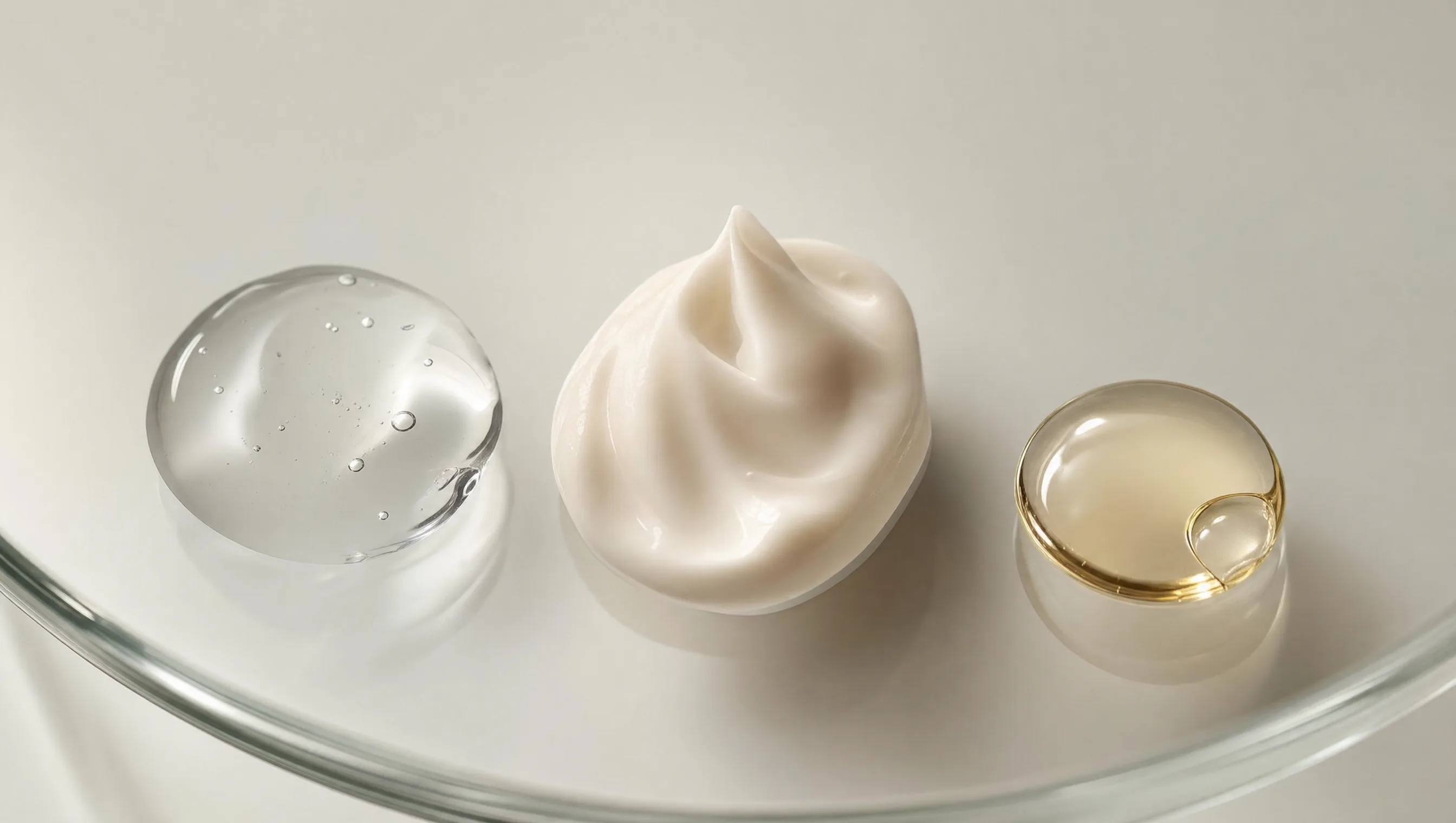
Every skincare ingredient falls roughly into one of three groups. Water-soluble (hydrophilic) ingredients dissolve in water and are typically delivered in aqueous serums, essences and gels. Oil-soluble (lipophilic) ingredients dissolve in oils and fats, and need an oil-based or anhydrous formulation to work at all. Amphiphilic ingredients interact with both, often acting as emulsifiers that let oil and water coexist in creams and lotions.
This isn’t academic categorisation for its own sake — solubility affects both whether an ingredient can plausibly penetrate skin and whether the product carrying it will layer properly with everything else in your routine. It’s also a big part of why formulation changes ingredient results: the same active dissolved into the wrong base can behave quite differently from the same active formulated well.
Why solubility decides penetration
The stratum corneum is fundamentally lipophilic — the “mortar” between skin cells is a matrix of fats, including ceramides, cholesterol and fatty acids. For an ingredient to cross it, some lipophilic character generally helps. Purely water-soluble ingredients tend to struggle at that barrier; purely oil-soluble ingredients can enter the lipid matrix but may then struggle to move on into the more aqueous environment of living cells beneath. The ingredients that penetrate most readily tend to sit in the middle — lipophilic enough to get into the stratum corneum, not so lipophilic that they get stuck there. Molecular size plays into this too; see our explainer on the 500 Dalton rule for the other half of the penetration story.
The water-soluble regulars
Hyaluronic acid is highly water-soluble and typically delivered in aqueous serums. Larger molecular weights stay on the surface; smaller weights can go slightly deeper but generally still remain within the stratum corneum. Niacinamide is water-soluble, formulated in aqueous bases, and penetrates reasonably well thanks to its small size and balanced properties. L-ascorbic acid (vitamin C) is water-soluble in its pure form but needs acidic pH and specific conditions to penetrate effectively, which is why it’s often formulated alongside lipophilic ingredients or reformulated into more stable derivatives. Glycolic acid is water-soluble and small enough to penetrate readily. Most peptides are water-soluble too, which is part of why penetration is such a live question for them — modern formulations often modify the peptide itself or add a delivery system to improve absorption.
The oil-soluble regulars
Retinol and retinoids are lipophilic, which actually helps them cross the lipid-rich stratum corneum, and are usually formulated in oil-based or emulsion systems. Vitamin E (tocopherol) is oil-soluble, often appearing in facial oils or emulsion systems, and works well layered under occlusives. Salicylic acid, unlike the water-soluble AHAs, is oil-soluble — which lets it get into oily pores and is a large part of why it’s a go-to for acne-prone skin specifically. Squalane is itself an oil, delivering other lipophilic ingredients while providing occlusion. Coenzyme Q10 is highly lipophilic and needs an oil-based delivery system to be useful at all.
Why “water before oil” is the rule it is
The layering convention — water-based products before oil-based ones — comes down to a simple mechanical fact: oil blocks water. Apply an oil or oil-rich cream first, and anything water-based applied afterwards will bead on the surface rather than absorbing. Reverse the order and it works properly — aqueous products absorb, and a subsequent oil layer can help seal that hydration in rather than blocking it. Emulsions sit in between: creams and lotions containing both phases can layer reasonably well in either direction, though they typically come after pure serums regardless.
A practical order, built on this logic: aqueous toners and essences first, then water-based serums (hyaluronic acid, niacinamide, vitamin C), then oil-based serums (retinol, vitamin E, squalane), then emulsion moisturisers, then pure oils or occlusives last. It isn’t a rigid template — plenty of products combine phases, and specific formulations vary — but it’s a useful default when you’re unsure where something goes. For a fuller walkthrough of building a full routine around this, see our layering guide.
Where solubility creates real friction
A few combinations are worth knowing about specifically. Water-based vitamin C and oil-based retinol can coexist in the same routine, but layering them directly on top of each other isn’t ideal — let the vitamin C absorb first, then follow with retinol in its oil or emulsion base. Multiple water-based serums generally layer fine together, though very viscous formulations should go after thinner ones to avoid pilling. Applying oil straight after an AHA or BHA can blunt its effect, since exfoliating acids need direct skin contact to work and an oil layer creates a barrier too soon. And silicone-heavy products — many primers and sunscreens — form a film that can stop subsequent water-based products absorbing, which is why they typically go last.
Can you just mix products together?
If both products are properly formulated, mixing in your palm can work reasonably well — it’s essentially what happens when products layer on your face anyway. What doesn’t work is expecting an oil serum and a water serum to blend into something stable simply by combining them; without an emulsifier doing the work, they may separate rather than blend, and neither performs at its best. Some brands do design products specifically to be mixed, using emulsifying agents for exactly this purpose — but that’s a deliberate formulation choice, not something that happens automatically when two products meet in your hand.
Emulsions as the bridge
Creams and lotions are emulsions — oil and water phases held together by an emulsifier — and can deliver both water-soluble and oil-soluble ingredients in a single product. Oil-in-water emulsions, with more water than oil, feel lighter and are typical of most moisturisers; water-based serums generally layer under these without much fuss. Water-in-oil emulsions, with more oil than water, feel richer, suit dry skin better, and create more of a barrier — so they’re usually applied after water-based products rather than before. The emulsion type matters more for layering behaviour than whether something is technically labelled a “cream” or “lotion.”
Common questions
Do occlusives always have to go last? Essentially yes — pure occlusives like petroleum jelly, heavy oils and silicones seal whatever’s beneath them, and anything water-based applied over them won’t absorb properly.
Why does my vitamin C serum pill when I layer it with other products? Usually a pH or texture mismatch, or applying the next layer before the vitamin C has fully absorbed — give it a minute or two before moving on.
Is “thin to thick” the same rule as “water before oil”? In practice, mostly — both point the same direction, from permeable to occlusive, which is why they tend to give the same answer even though they’re describing slightly different properties.
Working with your skin’s structure, not against it
The oil-versus-water distinction isn’t the only thing that governs layering — texture, absorption rate and individual formulation all matter too. But it gives you a genuinely useful framework for troubleshooting when a routine pills, doesn’t absorb, or seems to stop working the way it used to. Skin is a selective barrier, lipophilic on the outside and aqueous underneath, and working with that structure rather than against it is most of what good layering comes down to.