Eczema-Prone Skin: A Different Rulebook
Most skincare advice assumes a barrier that works. Eczema-prone skin doesn't have one, which means the usual playbook — layer actives, try new things, optimise your routine — can actively make things worse.
Most skincare advice is written for a barrier that basically works. Layer some actives, try new products, build up a routine — sound advice, if your skin can handle the exploration. If you have eczema (atopic dermatitis), that assumption doesn’t hold, and following it anyway is a reasonably efficient way to trigger a flare.
Eczema-prone skin runs on different rules. Not stricter versions of normal rules — genuinely different ones, because the underlying biology is different.
What’s actually different
Atopic dermatitis is a chronic inflammatory condition, not just “dry skin that needs more moisture.” It typically involves mutations affecting filaggrin, a protein essential to barrier formation, alongside broader immune dysregulation. The result is skin that’s dry, itchy, prone to red or inflamed patches, and unusually reactive to things that wouldn’t bother most people — with flares that come and go rather than a steady state. Flares are also linked to shifts in the skin microbiome — Staphylococcus aureus overgrowth is common on eczema-affected skin, which is one reason bacterial balance matters here alongside barrier lipids.
The central mechanical problem is a defective barrier. Ceramide content in the stratum corneum is reduced, lipid composition is abnormal, transepidermal water loss climbs, and irritants, allergens and microbes penetrate more easily than they should. This isn’t superficial damage that clears up with a nice cream — it’s a structural vulnerability that needs ongoing management, not a one-off fix. If you’re not sure whether what you’re dealing with is eczema, general sensitivity, or something else, this piece on reactive skin is a useful starting point.
Why the usual advice doesn’t transfer
“Use actives to address your concerns.” Many active ingredients that healthy skin tolerates well are genuinely risky here. Retinoids increase transepidermal water loss and can push already-compromised skin into a flare. Exfoliating acids add mechanical insult to a barrier that’s already struggling. L-ascorbic acid at low pH tends to sting sensitised skin specifically. Even niacinamide, usually the gentle option, doesn’t sit well with everyone who has eczema.
“Layer multiple products.” Every additional product is another potential trigger. Complexity that’s a minor risk for resilient skin is a real one here.
“Experiment to find what works.” Trial and error is a reasonable strategy when a bad reaction means mild irritation for a day. It’s a much worse strategy when a bad reaction means a flare lasting weeks.
“Natural is gentler.” Essential oils, plant extracts and botanical fragrances are among the more common eczema triggers going. “Natural” and “safe for a compromised barrier” aren’t the same claim.
What tends to work instead
Fewer products, not more. A basic routine — gentle cleanser, moisturiser, sunscreen — may genuinely be all that’s safe, and that’s not a compromise, it’s the strategy.
Prioritise barrier-supporting ingredients. Ceramides (particularly the combination of ceramides 1, 3 and 6-II, or EOP/NP/AP on an ingredient list) are the barrier lipids eczema-prone skin lacks, and products built around them tend to help. Cholesterol and fatty acids support the same lipid structure. Colloidal oatmeal has decent evidence behind it for anti-itch and barrier support. Petrolatum remains the most effective occlusive available — unglamorous, but it works. Glycerin helps draw water into the stratum corneum, and squalane is a well-tolerated emollient for most people in this category.
Be cautious with, or avoid, the rest. Fragrance — synthetic or natural — is one of the most common triggers, which is why “fragrance-free” matters more here than almost anywhere else. Essential oils (lavender, tea tree, citrus) are frequently problematic despite their reputation. Drying alcohols (alcohol denat, SD alcohol, isopropyl alcohol) and harsh surfactants like SLS strip the barrier further. Most active ingredients — retinoids, acids, vitamin C — need extreme caution or avoidance. Certain preservatives, methylisothiazolinone in particular, are known culprits for sensitised reactions.
Moisturising as treatment, not extra
For eczema-prone skin, moisturising isn’t a finishing step — it functions closer to treatment. Dermatologists commonly recommend “soak and seal”: bathe or shower in lukewarm water, pat skin partially dry (leaving it slightly damp), then apply moisturiser within a few minutes to lock that water in. For more significant dryness, an occlusive layer like petrolatum over the moisturiser adds further protection.
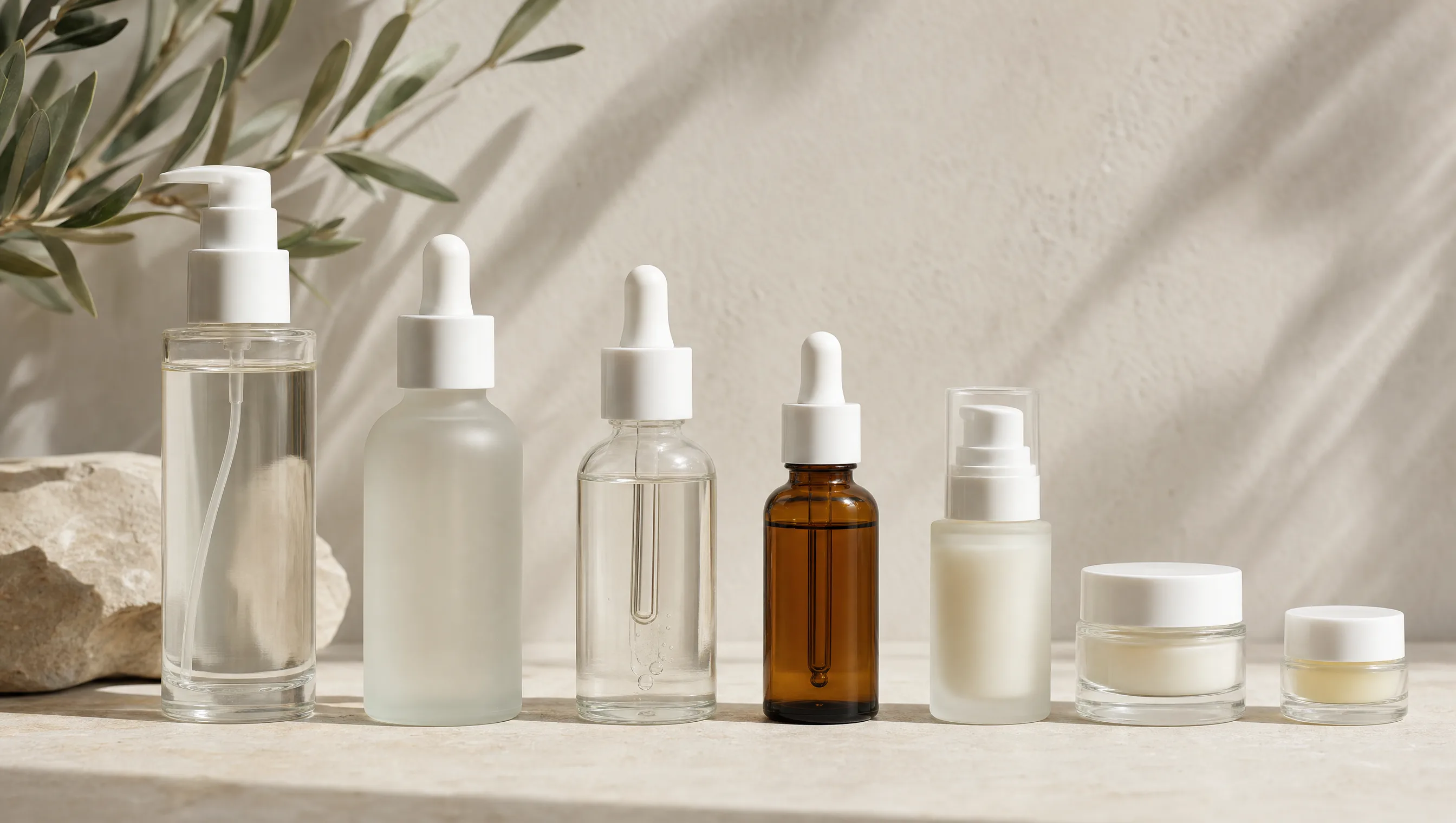
On format: ointments (petroleum jelly, healing balms) are the most effective but least elegant option, best reserved for severe dryness or night-time. Creams (water-in-oil emulsions) balance occlusion with a more wearable feel. Lotions (oil-in-water) are the most comfortable for daily use but the least occlusive. When in doubt, lean heavier than feels necessary — apply at least twice daily, more often during a flare.
Cleansing without undoing the moisturising
Every wash strips some barrier lipids, which makes cleansing a small but real trade-off for eczema-prone skin. Lukewarm water only — hot water accelerates barrier stripping and can itself trigger itch. Choose gentle, fragrance-free, non-foaming, soap-free cleansers. Wash less than you think you need to, use gentle motions with no scrubbing, and moisturise immediately afterwards while skin is still slightly damp.
Can any actives be used at all?
Sometimes, with care. Niacinamide at low concentrations (2–4%) is often tolerated and supports barrier function. Hyaluronic acid helps some people, though it can sting on a very compromised barrier. Centella asiatica extracts have a reasonable anti-inflammatory, soothing reputation. Panthenol is generally well tolerated and supports healing.
Higher-risk-but-sometimes-workable options include low-concentration azelaic acid for redness (though it can still irritate), gentle retinyl esters used very infrequently (rarely worth it, in practice), and non-ascorbic-acid vitamin C derivatives at higher pH.
Generally best avoided: L-ascorbic acid, strong retinoids (retinol, retinaldehyde, tretinoin), AHAs and BHAs, benzoyl peroxide, and most standard acne treatments. If you want to try any active, patch test thoroughly, introduce it during a stable period rather than mid-flare, and be ready to stop the moment something changes — the reintroducing actives approach applies here too, just with a much lower threshold for stopping.
When a flare hits
Skincare takes a back seat during active flares. Simplify to the bare minimum — gentle wash, thick moisturiser or ointment. Stop all actives entirely. Follow prescribed treatment (topical steroids, calcineurin inhibitors) as directed, and consider wet wrap therapy for severe episodes. Don’t introduce anything new. Once the flare settles, keep the simplified routine going until skin has genuinely stabilised, then reintroduce products one at a time, slowly — rushing back to a “normal” routine too early is a common way to trigger the next flare.
The steroid question, honestly
Topical corticosteroids are a mainstay of eczema treatment, and a lot of avoidable suffering comes from people under-using them out of steroid fear. Used correctly — at the potency, frequency and duration your prescriber sets — they’re safe and effective, and an untreated flare generally does more harm than appropriately used steroid treatment does. They’re for treating active flares, not for daily prevention, and steroid-free periods let skin recover in between. If steroid concerns are keeping you from using a prescribed treatment, that’s worth raising with a dermatologist directly rather than quietly avoiding the medication.
Sun protection
Mineral sunscreens (zinc oxide, titanium dioxide) tend to be better tolerated than chemical filters, and fragrance-free is close to non-negotiable. Even “gentle” or “sensitive skin” sunscreens can trigger some people, so patch testing still applies. Physical barriers — hats, clothing, shade — reduce how much you have to rely on any product at all.
When it’s time for a dermatologist
Self-management has limits. See a dermatologist if flares are frequent or severe, over-the-counter treatment isn’t controlling symptoms, you notice signs of infection (oozing, crusting, spreading redness), eczema is affecting quality of life, or you’re genuinely unsure what to do next. Moderate-to-severe eczema tends to do better with professional input than with continued trial and error.
Where that leaves you
Eczema-prone skin needs a genuinely different approach, not a gentler version of the standard one. The instincts that serve most skin well — more actives, more variety, constant optimisation — are the ones most likely to backfire here.
The priorities that actually help: protect and repair the barrier through consistent moisturising, avoid known triggers (fragrance, harsh surfactants, most actives), keep the routine minimal, treat flares properly rather than fearing the medication that works, and accept that some ingredients other people rave about may simply never suit your skin. That might mean missing out on trending actives and elaborate routines. A minimal routine that keeps skin stable is a better outcome than a more exciting one that triggers flares.
This is a condition to manage, not cure — and consistently keeping skin stable is a genuinely reasonable goal, even if it isn’t a dramatic one.